
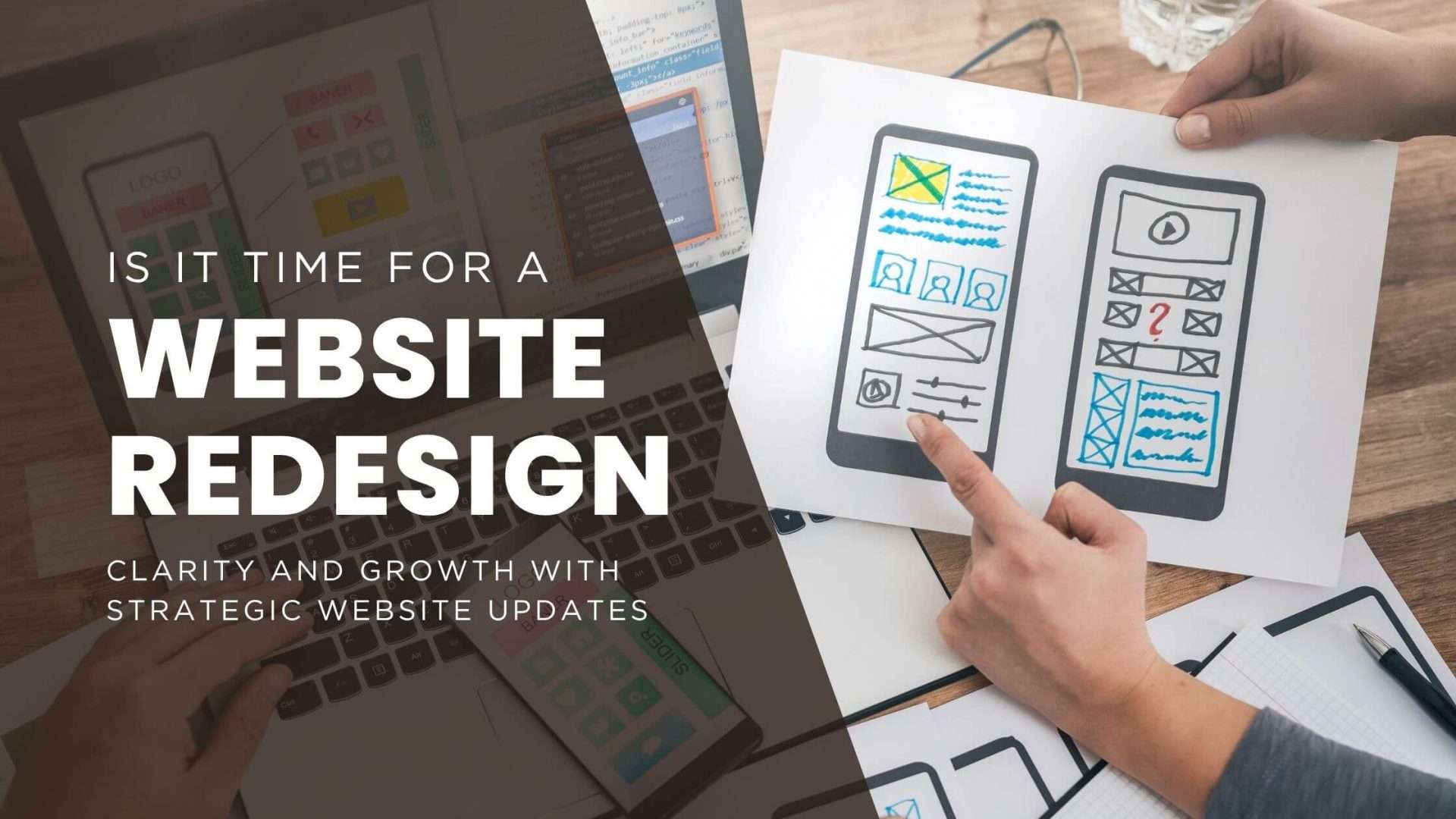
Your website is often the first impression people have of your business, and over time, that first impression can start to fade. As your business grows and evolves, your site should grow with it. A website redesign isn’t just about new colors or layouts; it’s about making sure your online space reflects who you are today, not who you were when you launched. If you’ve found yourself wondering when it is time to redesign your website, this guide will help you recognize the signs that it might be time for an update and how to approach the process strategically.
Why a Website Redesign Matters
A redesign isn’t just about making things look nice (though a refreshed look can absolutely help!). At its core, redesigning is about putting your clients and visitors first and planning around how to reach more potential customers and better serve the ones you already have. Research from the Nielsen Norman Group shows that good UX directly impacts user trust and engagement.
If your website no longer supports your business goals, helps visitors find what they need, or reflects who you’ve become, it may be holding you back more than you realize.
If you’re unsure how your site is really performing, start with a professional Website Review which is a quick way to uncover what’s working, what’s not, and where a redesign might make the biggest impact.
Let’s dig into some of the signs.
5 Signs It Might Be Time to Redesign Your Website
1. Your website no longer reflects your brand.
This is one of the biggest reasons I see small business owners reach out. Maybe you’ve updated your logo and colors, reworked your messaging, added new services, or shifted your voice and tone.
But your website still tells an old story.
And when there’s a disconnect between what you’re saying now and what your site says visually or verbally, visitors can get confused, or worse, they might not take you seriously. According to Stanford’s Web Credibility Project, visitors quickly judge a business’s trustworthiness by its website design.
A redesign is often the natural next step after a rebrand. You can see how messaging and design align in my post on what you get with professional website design.
2. You’re embarrassed to share your site.
If you find yourself avoiding sending people to your website (or giving a disclaimer before you do), that’s a red flag.
Your website should be a tool you’re proud of, not one you hide.
3. You’ve added services or features that your site doesn’t reflect.
Businesses evolve. You might’ve expanded what you offer, added new packages, changed your target audience, or introduced new ways to work together.
If none of that is visible or easy to understand on your site, it can cause people to miss opportunities to hire or buy from you.
4. The functionality no longer works, or it never did.
Sometimes the visual branding is fine, but the tech is outdated. Maybe you’ve noticed:
- Broken forms
- Pages that load slowly (or not at all)
- Spam messages from contact forms
- A mobile layout that’s hard to read or navigate
Or maybe you want to add something new, like a job application, booking form, or blog, but your current platform or setup can’t handle it. That’s a clear sign your site isn’t growing with you.
5. Your site is hard to update, or you avoid it completely.
If you feel like you need a developer every time you want to change a sentence, that’s not sustainable.
Today’s websites should be built with usability in mind, so that business owners (or their team members) can make small updates easily. If your site is too fragile or outdated to do that, it may be time for a refresh.
What a Redesign Actually Means
Here’s where many people get stuck: they assume a redesign has to be a complete overhaul.
But that’s not always the case.
In fact, I’ve worked with plenty of clients where we were able to:
- Keep the base of the site (especially blog posts or resources)
- Update fonts and colors for accessibility
- Redesign just a few key pages for better user experience
- Shift content and layout without rebranding the whole business
And on the other hand, some people assume redesigns are only about visuals. But sometimes, what’s really needed is better messaging, stronger content, or improved SEO and performance.
A good redesign starts with strategy, not just style.
A Missed Opportunity: When Clients Wait Too Long
I’ve seen firsthand what happens when people delay a redesign for too long.
One client had built an incredible business with tons of value to offer, but their website hadn’t been updated in years. It still looked (and acted) like it was built in 2012.
Potential customers landed on the site and bounced almost immediately. The business lost trust before a conversation could even start.
When we finally redesigned the site, their traffic stayed longer, inquiries increased, and they finally felt excited to share their URL again.
Outdated websites don’t just look old—they send the message that a business might be out of touch. And that’s rarely true for the business owner behind it.
If this section hit home, you might also appreciate my article on 8 Signs It May Be Time to Redesign Your Website, which dives deeper into the most common triggers I see with small business clients.
Why People Avoid Redesigns
There are lots of emotional and practical reasons small business owners put off a redesign.
You might feel tied to the current site—especially if a friend, family member, or DIY effort brought it to life. Or you may feel like “something is better than nothing,” so it doesn’t seem worth the time or money to make a change.
But if your site isn’t helping you grow, convert, or communicate clearly… it’s not doing its job. And you deserve better than a barely-working placeholder.
How I Help Clients Decide What’s Next
If someone comes to me unsure about whether they need a full redesign, here’s what we do first:
We look at how the website is functioning as a business tool—not just a brochure.
I ask:
- How are you using the site now?
- How do you want visitors to interact with it?
- What features do you wish it had?
- What content feels outdated or off-brand?
Sometimes, a refresh of the homepage and services page is all that’s needed. Other times, a more comprehensive redesign opens up new opportunities.
The key is this: we don’t start with assumptions. We start with curiosity, data, and a desire to serve your audience better.
How to Avoid a Redesign That’s All Style, No Substance
A website can look beautiful and still do nothing to support your business.
That’s why I spend time on content, messaging, and calls to action—not just the layout.
Most of my clients aren’t marketers. They’re great at what they do, but unsure how to translate that into effective website copy. That’s where I come in.
I help shape the message so it connects with the right audience and leads them where they need to go. That’s what turns a website into a strategic tool—not just an online brochure.
What If You’re Still Not Sure?
If you’re reading this and wondering, “Okay… maybe I do need a redesign… but I’m still overwhelmed,” you’re not alone.
Redesigns can feel big, especially when you’re busy running a business. That’s why I offer a simple starting point: the Website Review.
It’s a personalized walkthrough of your current site, including:
- What’s working well
- Where there’s room for improvement
- A prioritized list of action steps
There’s no obligation to move forward with a full redesign. You can take the feedback and implement it at your own pace—or bring me in to help. Either way, you’ll walk away with clarity and a plan.
You Deserve a Website Redesign That Works for You
Your website should support your business—not stress you out.
It should reflect who you are, what you offer, and how you can help your clients. And it should grow with you, not hold you back.
If you’re feeling unsure about whether your current site is still the right fit, don’t ignore that nudge.
Book a Website Review today, and let’s find out what’s next.
You don’t need a perfect site.
You need one that works—with clarity, purpose, and strategy.